Turnkey industrial robotics training systems for job-ready technicians.
ROOTS Education helps community colleges, technical colleges, CTE programs, workforce boards, and advanced manufacturing employers build hands-on industrial robotics programs. The RISE Series combines industry-grade equipment, applied curriculum, instructor development, and ongoing support so learners do more than program a robot: they configure, assemble, integrate, calibrate, operate, troubleshoot, and maintain complete robotic work cells.
Programs can begin with foundational robot operation and expand into advanced integration, controls, troubleshooting, and Industry 4.0 systems work. ROOTS designs each implementation around the institution’s facilities, instructors, employer partners, credential priorities, and local workforce needs.
RISE Series robotics education for modern manufacturing
The RISE Series provides a stackable learning progression for students preparing for careers in robotics, automation, mechatronics, industrial maintenance, and controls. Learners work with flexible robotic cells and open interfaces that reflect the equipment, processes, and problem-solving expectations found in modern manufacturing environments.
Find the RISE system for your program
Three starting points. One goal: engaging, challenging learning that connects students with industry.
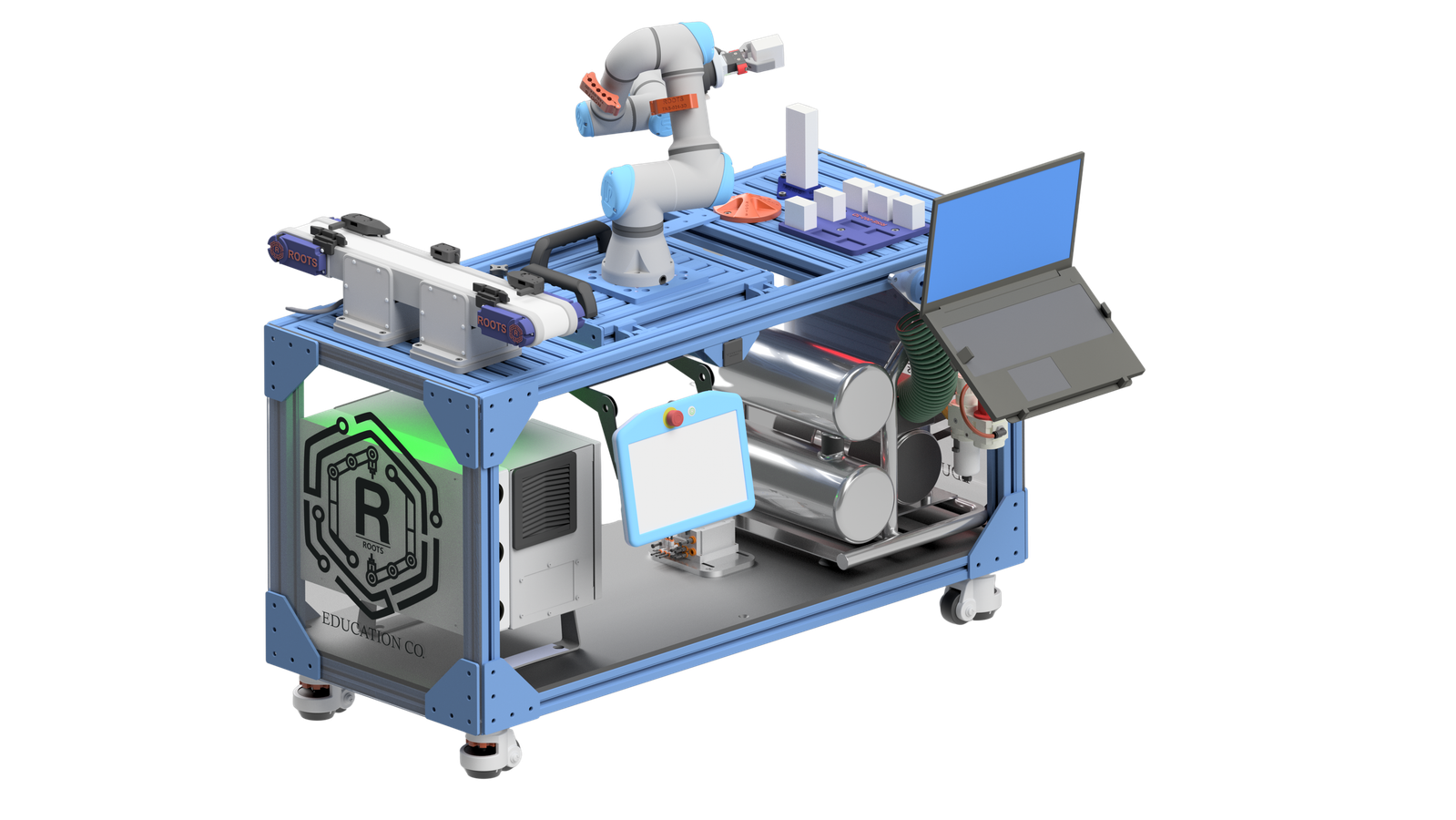
RISE Core
Collaborative robotics foundations
Introduce robot programming and industrial applications through a hands-on automation cell.
Collaborative robotics starting point
Explore RISE Core
The Core brochure includes a UR3e collaborative robot, conveyor, teach pendant and laptop. Learners use PolyScope to program, test and integrate robot applications.
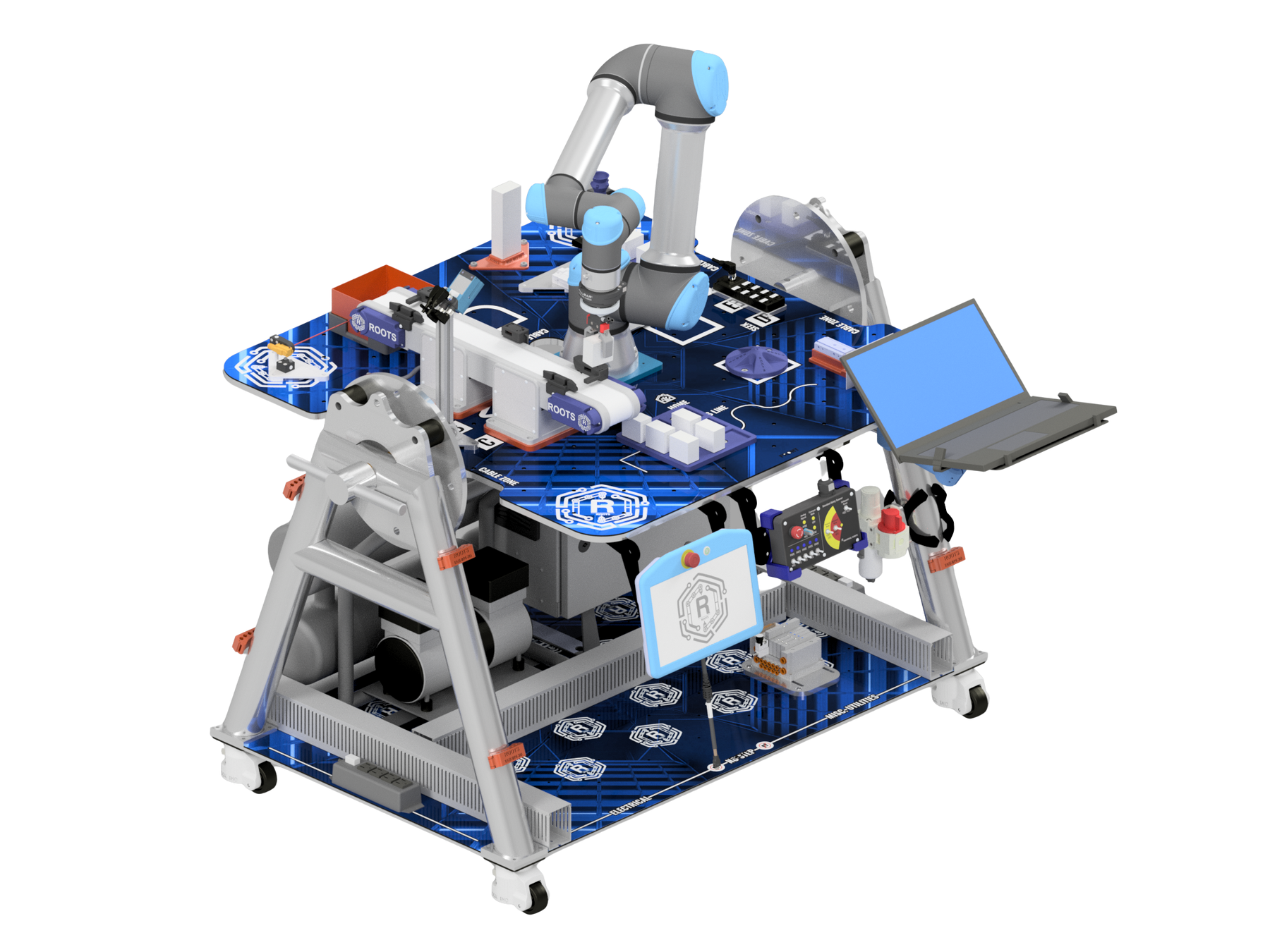
RISE Plus
Integrated work-cell learning
Challenge 4–5 students working simultaneously with robotics, sensing, vision and automatic tool changing.
Customization available
Explore RISE Plus
ROOTS makes learning an active, engaging journey—one that challenges students to experiment, solve problems and discover what they can build together. RISE Plus gives 4–5 students the opportunity to work simultaneously, connecting hands-on exploration with the technologies they’ll encounter in industry.
The base package includes a UR7e collaborative robot, sensors, actuators, automatic tool changing, a conveyor, a SICK vision kit with AI, a robotic simulator, several learning activities and supporting training materials.
These technologies give learners opportunities to test ideas, work through challenges and build confidence as their skills develop. ROOTS continually improves its learning activities and materials to keep pace with industry, helping instructors bring fresh, relevant challenges into the classroom.
Tell us about your students, teaching goals and available space. Let’s build a learning experience that gets them excited about what comes next.
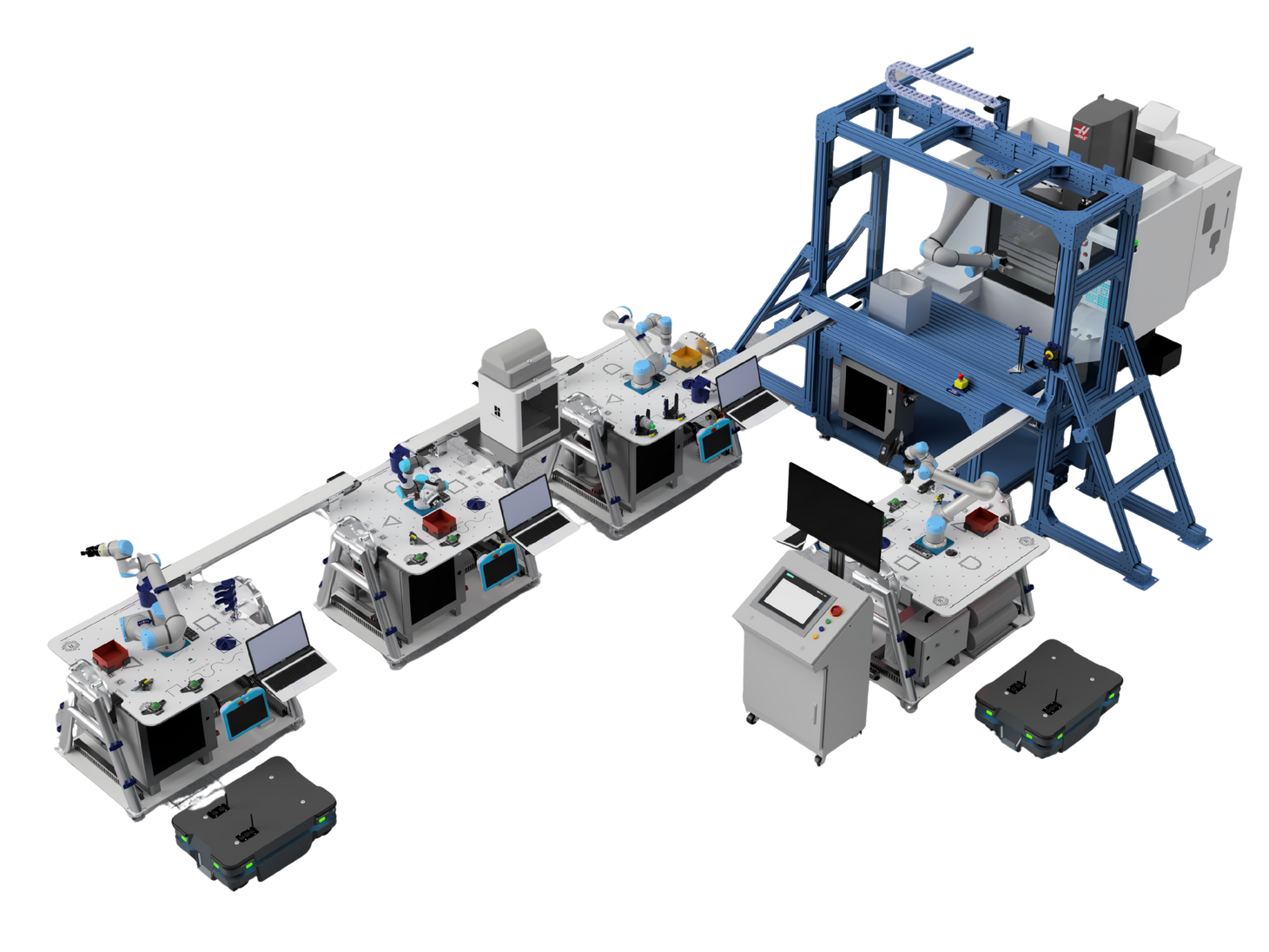
RISE Pro
Advanced manufacturing integration
Connect robotics with broader manufacturing processes and increasingly complex integration challenges.
Customization available
Explore RISE Pro
Shape an automation learning environment around your program’s technical goals. Optional applications can include CNC machine tending, serialization and palletizing.
Equipment, activities and integration scope are agreed during project planning; optional stations are not implied to be part of a standard package.
Product renderings show example configurations. Final equipment and options are confirmed with ROOTS.
Your goals shape the system.
RISE Plus and RISE Pro offer customization options around your learning outcomes, available space and industry priorities. ROOTS helps define the equipment, learning activities and instructor support for your program.
Students explore, build and solve problems together. ROOTS continually improves its learning activities and materials to keep pace with industry.
VIRTUAL ROBOTICS SIMULATION
Simulate the process. Connect the whole system.
Simulation is fundamental to the ROOTS learning journey. Students rehearse exercises, explore robot sequences and see how work cells connect—then apply that understanding with hands-on equipment and instructor guidance.
Engaging, challenging practice helps learners connect individual tasks with the bigger picture: how a complete robotics system works together.
Illustrative RISE line simulation. Equipment and activities vary by program configuration.
Hands-on skills developed through ROOTS systems
Robot setup, operation, teaching, and safe work practices
Mechanical assembly, mounting, wiring, and calibration
Programming and integration of sensors, actuators, and peripheral equipment
Work-cell configuration, testing, troubleshooting, and maintenance
Process planning, fabrication, material movement, and production workflows
Team-based capstone projects that connect multiple technologies into a functioning system
Industry 4.0 concepts and the relationships among robotics, automation, controls, and manufacturing data
A complete robotics program—not equipment alone
ROOTS provides an implementation system designed to help institutions launch, expand, or modernize a technical program. The exact configuration is customized, but a ROOTS engagement can include:
Industrial-grade collaborative robotics and modular training cells
Curriculum and project-based learning activities aligned to the selected equipment
A customized learning management system for lessons, assessments, and student progress
On-site train-the-trainer education and instructor coaching
Student support during the design-and-build stage of curriculum projects
Program planning, equipment integration, installation, and continuing technical support
Credential and pathway alignment based on institutional and regional priorities
RISE implementations can align with Universal Robots and CAROL 4.0 learning pathways and support preparation toward relevant credentials such as CIP, SACA, NIMS, and MSSC. Final credential selection and eligibility depend on the institution, course design, and issuing organization.
Designed for colleges, CTE programs, and workforce partners
ROOTS robotics systems can support new or existing programs serving:
Community and technical colleges
Career and technical education centers
High-school advanced manufacturing and STEM pathways
Workforce-development organizations and regional training centers
Registered apprenticeship and pre-apprenticeship programs
Manufacturers developing incumbent-worker and technician pipelines
The modular approach allows an institution to establish core capabilities first and expand as enrollment, employer participation, funding, and instructional capacity grow.
Evidence from a major college implementation
Valencia College documented a $2.475 million sole-source procurement of ROOTS Robotics Integrated Learning Factory Trainers. Its public board material states that the ROOTS system met the program’s requirements and combined services, curriculum, and customized equipment in a way the college found unavailable from another provider. Read Valencia College’s public award documentation.
Funding-aligned workforce infrastructure
ROOTS can help institutions organize equipment, curriculum, instructor development, and implementation plans for funding conversations involving Perkins V, WIOA workforce-development grants, EDA infrastructure programs, and applicable state or regional capital initiatives. Funding eligibility and allowability are determined by the applicable agency and grant terms; ROOTS supports the technical planning and documentation needed for an informed application.
Frequently asked questions
What makes ROOTS different from a basic robot training kit?
ROOTS emphasizes complete work-cell integration. Learners configure, assemble, calibrate, program, troubleshoot, and maintain systems that combine robotics with sensors, controls, tooling, and production workflows.
Can ROOTS support a new robotics program?
Yes. ROOTS can help an institution move from program concept through equipment planning, installation, curriculum alignment, instructor training, and launch support. The final scope is customized to the institution.
Can an existing program expand with RISE?
Yes. The modular architecture is designed to support phased expansion, additional robotic cells, new processes, and more advanced capstone work.
Does ROOTS train instructors?
Yes. On-site train-the-trainer education and continuing instructional support are central parts of the ROOTS approach.
Which students are a good fit?
RISE can support learners from introductory CTE and STEM pathways through postsecondary technician education, workforce upskilling, and advanced systems-integration projects. Course prerequisites should be set by the institution for each level.
Does ROOTS manufacture robot arms?
No. ROOTS is a workforce-training systems designer and integrator, not a robot-arm manufacturer. ROOTS builds the instructional work cell around selected industry hardware and connects the equipment with curriculum, instructor preparation, assessments, installation, and support.
Can ROOTS build a system around existing curriculum or equipment?
Yes. ROOTS can design a custom configuration around an institution’s course outcomes, lab space, learner level, employer priorities, and compatible existing equipment. The final design is confirmed through a technical and instructional planning process.
What is the most popular RISE configuration?
There is no single universal configuration that is best for every institution. RISE Core, Plus, and Pro systems are selected and configured around program goals, student level, available space, budget, target occupations, and regional employer needs.
Plan your industrial robotics training system
Tell ROOTS about your learners, facility, employer partners, credentials, funding priorities, and target launch date. We will help you define a training environment that connects classroom instruction to the skills modern manufacturers expect.